
News / Blog
Difference Between Asbestos Cloth and Fiberglass Cloth
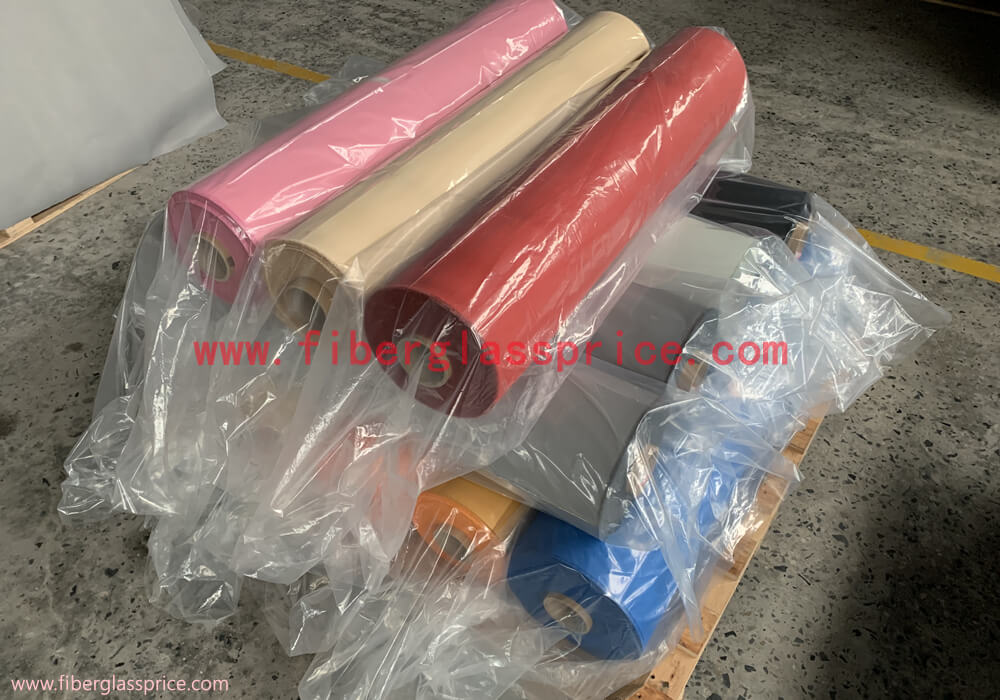
As we all know, asbestos is harmful to human life and health. Will fiberglass cloth cause cancer like asbestos? Will it cause other diseases?
In fact, scientists all over the world have already done a lot of in-depth research on this. The conclusion is the same, and answer is NO.
First of all, this is because although asbestos and glass fiber are very similar in appearance, shape, performance and use, their composition and structure are different. Asbestos fiber is crystalline fiber, while glass fiber is amorphous structure. Asbestos fiber can develop axial image cracking into finer fibers, which is very important to human health.
Glass fiber generally refers to the filamentous glass fiber made of silicate melt. For example, the diameter of continuous glass fiber is 3-25um, mainly 6-15um. Glass fiber is not crystal structure, and it is impossible to crack into finer fibers along the axis. Most of these fibers are brittle and easy to break into shorter fibers under stress.
Asbestos is a natural inorganic crystalline fiber, and the diameter of asbestos fiber is generally only 0.02-2um. As asbestos is a crystalline fiber, it may crack into finer fibers along the axial direction once subjected to external force. We breathe air at work. Some long glass fibers floating in the air will be filtered by nasal hair and mucous membrane of nose, bronchus and trachea, that is to say, not all glass fibers floating in the air will be inhaled into the human body.
According to long-term experiments conducted by the World Health Organization (WHO), American graduate students of occupational safety and health and many experts in the world, the minimum diameter of fibers inhaled by the human body should be less than 3um, and its length diameter ration should be greater than 5;1. It is generally believed that fibers with a length of more than 200-250um will not be inhaled into the depths of the human lungs, Some experts believe that fibers with a length of more than 100um can hardly be inhaled into the depths of human lungs.
In other words, the commonly used continuous glass fiber (6-13um in diameter) cannot be inhaled into the depths of human lungs: That is, from the perspective of fiber physical form and geometric size, glass fiber is difficult to be inhaled into the depths of human lungs. In the process of continuous glass fiber drawing, the surface of the new fiber is coated with wetting agent, wound on the precursor cylinder and sent to the next process for processing. The wetting agent is an aqueous solution, which protects the new fibers during wire drawing, so there are generally no short fibers entering the space.
During its processing and use, there are not many glass fiber breaks and hairy edges. In these ambient air, the concentration of glass fiber is very low, generally less than one fiber per cubic centimeter of air volume. Moreover, due to the fiber diameter range of 6-13um and the fiber is thick, it has a faster settling speed in the air, resulting in a shorter residence time in the air. Compared with asbestos, glass fiber, The concentration is less than hundreds of times. Because the concentration of glass fiber in the air is small, the probability of glass fiber being inhaled into human lungs is very small.
Second, we need to understand how long glass fiber can exist in the lungs once it is sucked into the depths of the lungs? Of course, the shorter the glass fiber stays in the human body, the better.the existence time of glass fiber is human lung depends on the chemical stability of glass fiber, that is the anti-corrosion ability of glass fiber to its lung fluid, which plays a very important role in its potential biological role. Glass fiber is an amorphous silicate material containing different metal oxides and non-metal oxides with SiO2 as the main component. Because the glass fiber is formed during wire drawing, the new ecological fiber will form some cracks on the surface of the glass cylinder due to thermal stress. In addition, the surface of the glass fiber contains some cations and is hydrophilic, so the surface of these fibers in the lung fluid is easy to be infiltrated by the lung fluid.
The complete dissolution time of asbestos is about 300 years. So far, no one in the world can live to 150 years old. That is to say, once asbestos fiber is inhaled into the depths of human lungs, it will go to the grave with people all his life. When glass fiber is inhaled into the depths of human lungs, it will only take a few months to be dissolved and absorbed by human lung fluid. Therefore, glass fiber is not harmful to human life.
In addition, follow-up investigation and research have also been carried out in relevant factories at home and abroad. The United States has studied a total of 4864 workers in six glass factories, investigated the deaths in recent 30-35 years, and conducted a similar investigation on a total of 6585 worker in two factories that produce both glass wool and continuous glass fiber, It was found that there was no significant difference between the lung cancer death risk of these workers and the expected results of people living in the same area, and the observed lung cancer risk and exposure time.
The time since the first exposure or the cumulative time of exposure to glass fiber has nothing to do with the lung cancer mortality of factory workers with continuous glass fiber, which does not significantly exceed the local lung cancer mortality, and had nothing to do with the exposure time or cumulative exposure time. Therefore, it is proved once again that glass fiber will not endanger human life.